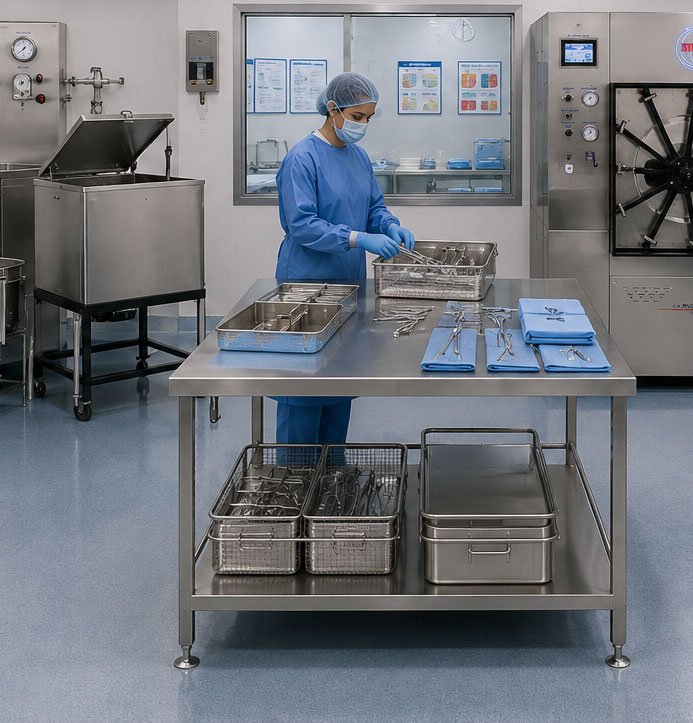
Why Hospitals Need a Well-Planned CSSD
Hospitals operate in a dynamic, high-pressure environment where multiple departments depend on sterilized instruments.
A poorly designed CSSD can create hidden operational issues that affect the entire system.
Common Challenges in Hospital CSSD:
✔ Delays in operation theatre schedules due to instrument shortages
✔ High dependency on manual handling
✔ Poor separation between dirty and sterile zones
✔ Inefficient movement of trays and trolleys
✔ Overloaded sterilization equipment
✔ Lack of proper storage systems
✔ Difficulty during NABH audits
✔ Increased risk of contamination
These problems often grow as the hospital expands.
A structured CSSD solves them at the root level.
What Makes Hospital CSSD Different from Other Setups?
Hospital CSSD requirements are more complex compared to labs or small clinics.
Key Factors:
✔ Continuous instrument flow (high volume)
✔ Multiple departments depending on CSSD
✔ Daily surgery load fluctuations
✔ Emergency readiness requirements
✔ Strict infection control expectations
✔ Compliance and audit readiness
✔ Need for scalability
Because of this, hospital CSSD must be planned as a system, not just a room with machines.